Fall is when many schools launch aviation clubs, STEM electives and career exploration units. If flight simulation is part of the plan, one of the first equipment questions is which controls to use. HOTAS sticks and yokes each represent different types of aircraft and teach different skills.
Short answer: a yoke resembles the controls in many general aviation and commercial aircraft, which makes it a natural fit for civil aviation pathways. A HOTAS setup, which stands for hands on throttle and stick, resembles controls found in many military and high-performance aircraft. Programs that cover both benefit from having both options.
What is a flight yoke?
A yoke is a control wheel or column that the pilot pulls, pushes and turns to control pitch and roll. Many training aircraft and airliners use yokes. Thrustmaster TCA yokes are modeled on airliner-style controls and pair with throttle quadrants for realistic procedures. Yokes are well suited to students exploring private pilot training, commercial aviation and airline careers.
What is a HOTAS setup?
HOTAS combines a joystick and a separate throttle, each with buttons and switches, so pilots can manage key functions without moving their hands. This layout is common in military aircraft and in many simulation titles. HOTAS is engaging for students interested in military aviation, aerobatics and flight simulation competitions.
Which controls should a school choose?
- Civil aviation focus: start with a yoke and throttle quadrant.
- Military or aerospace focus: start with HOTAS.
- General STEM and exploration: either works; having both broadens experiences.
- Competition or clubs: match the controls to the aircraft types students fly most.
The Esports Pod supports Thrustmaster flight gear, including HOTAS and TCA yokes, so programs can choose the configuration that matches their goals.
How do rudder pedals fit in?
Rudder pedals control yaw and are used during takeoff, landing and coordinated turns. They add realism and help students understand how pilots use their feet as well as their hands. Pedals are a valuable addition for programs that want students to practice full flight procedures.
How does the display affect flight simulation?
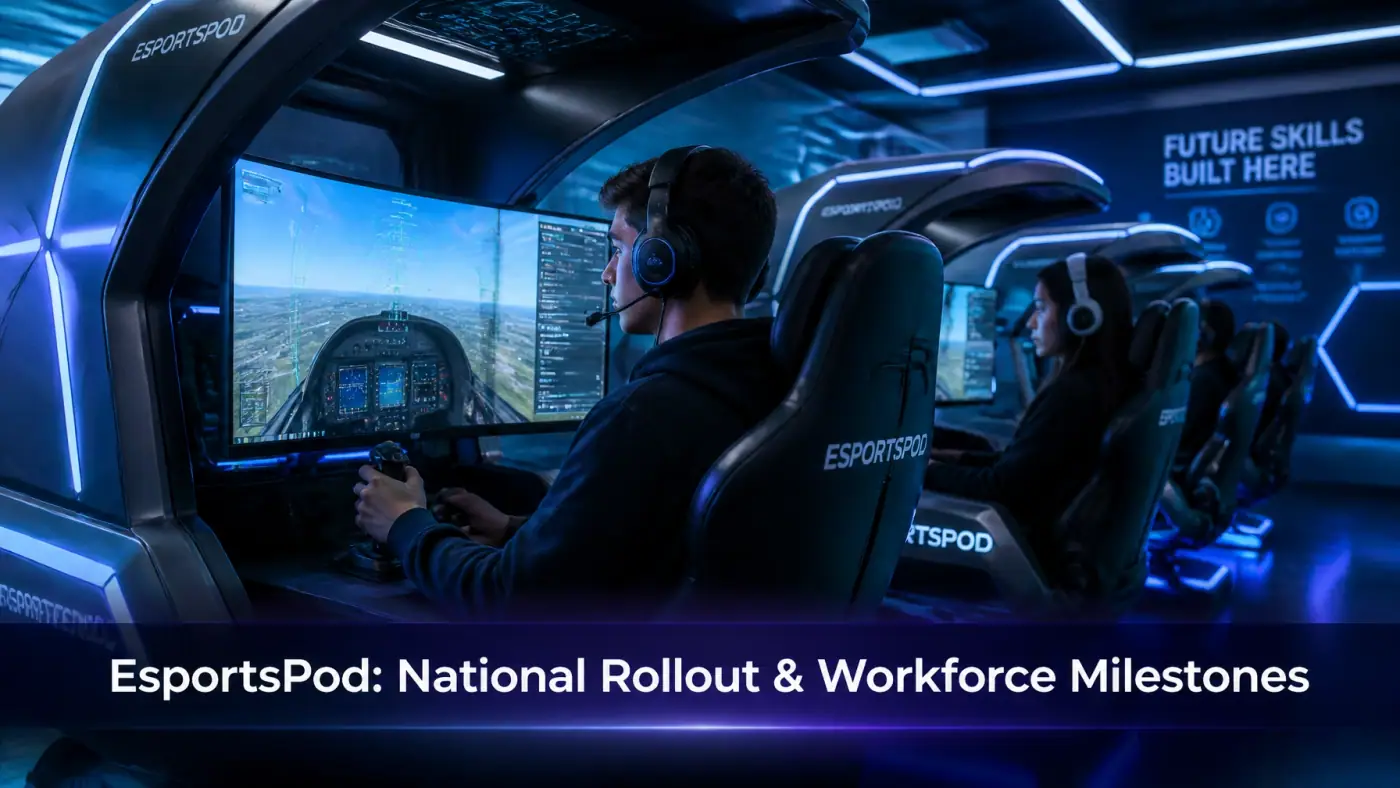
A wide field of view helps students maintain situational awareness, judge approaches and scan instruments. The Alienware 38-inch curved monitor in the Esports Pod provides a wide view from the seat. Optional HTC Vive Pro Eye VR adds full immersion, letting students look around the cockpit naturally.
How can teachers structure a flight simulation unit?
- Introduce the four forces of flight and basic instruments.
- Demonstrate controls using the projector slot so the whole class can see.
- Have students practice straight and level flight, turns, climbs and descents.
- Progress to takeoffs, traffic patterns and landings.
- Finish with a planned cross-country flight using navigation skills.
Is classroom simulation the same as certified training?
No. Classroom simulators support familiarization and interest. Only approved, certified training devices can be used to log certain training requirements. Be clear with students and families about this distinction.
How can schools connect simulation to aviation professionals?
Local airports, flight schools, aviation museums and pilots in the community are often happy to share their experience with students. Invite a guest to watch a simulation session and explain how real procedures compare. Students gain context and a clearer picture of the training path, and teachers gain partners who can support the program over time.
Explore flight configurations on our products page or book a demo to try both control styles.
Frequently asked questions
What does HOTAS stand for?
HOTAS stands for hands on throttle and stick, a control layout that places key functions on the throttle and joystick.
Is a yoke better than a joystick for beginners?
For students interested in general or commercial aviation, a yoke often feels more representative. Either can teach basic flight principles.
Do flight simulators need rudder pedals?
Pedals are not required to start, but they add realism and help students practice coordinated flight and landings.